How to Lay a Gravel Path
Creating a gravel path is an effective way to enhance your garden’s character and functionality, and it’s also very simple to create. Whether you’re a DIY enthusiast or a landscape professional, our guide will walk you through each step of the process, helping you craft a durable path that stands the test of time.

Why Choose Gravel?
Gravel paths are an ideal alternative to concrete or stone paving slabs. Here’s why:
Cost-Efficiency – Compared to concrete and stone slabs, gravel is much more affordable, which makes it a budget-friendly alternative for your project.
Easy Installation – Building a gravel path is a DIY-friendly project due to it not requiring any specialised tools or skills.
Aesthetic Appeal – Gravel can complement almost any garden style, offering a natural and lasting look.
Excellent Drainage – Gravel pathways or crushed stone paths are permeable, helping to prevent water pooling and promoting soil health.
If you’re considering adding a path but are unsure which option to take, gravel delivers a balance of practicality and visual appeal.
Step-by Step guide on How to Build a Gravel Path
Step 1: Planning Your Path
The first step to any successful gravel path project is careful planning. Make sure to have your garden measuring and marking tools ready.
Determine the Location and Shape
Gravel offers flexibility in how you want your path to look, so whether you’re wanting a straight path or a curved path, its important to ensure that the design fits your garden’s layout. Gravel paths make it easy to add curves and shapes compared with slabs where it’s trickier to get curves – especially for beginners. It can be a good idea to mark out a rough guide of your garden path using builders line.
Measure Dimensions
Establish the path’s width and length. A width of 1.2m allows for two people to walk side by side, though a narrower path will work well for smaller spaces.
Once you have your dimensions set, you can begin to calculate how much of the materials you will need.
Step 2: Calculating Gravel Requirements
No one wants to run out of materials mid-project, so calculate how much gravel (and base material) you’ll be needing for your path.
Gravel Depth
It is recommended to aim for a 5cm, or 2 inch, depth for the gravel. If you are expecting your path to be used fairly regularly and consistently then you may want to consider an additional crushed stone layer underneath to prevent potential sinking.
Gravel Formula
Cubic Metres = length in metres × width in metres × depth in metres.
1 Cubic Metre of gravel is typically 1,680kg. It’s best to check with your supplier.
Order slightly more gravel than the calculation suggests to account for any wastage/depth variance in the path.
While planning, it’s good to consider edging products that will keep the gravel contained and maintain a clean boundary.
For sloped areas, look into path and driveway stabilisation grids to keep gravel in place securely.
Step 3: Preparing the Ground
Preparation is key for a long-lasting path. Here’s what to do:
Clear the Area
Remove existing weeds or any debris from the path’s layout. This ensures a clean foundation for your gravel.
Level the Ground
Level uneven areas for a flat path. For larger dips or uneven terrain, consider adding infill material (either topsoil or sand or crushed stone if you’re using) before moving forward.
Install a Weed Membrane
Laying a fabric weed membrane to control weeds will stop them from growing through the gravel, whilst still allowing water to drain. You may still get ‘blown-in’ weeds in the path from seeds landing in the gravel.
Step 4: Laying the Gravel Path
Install Edging
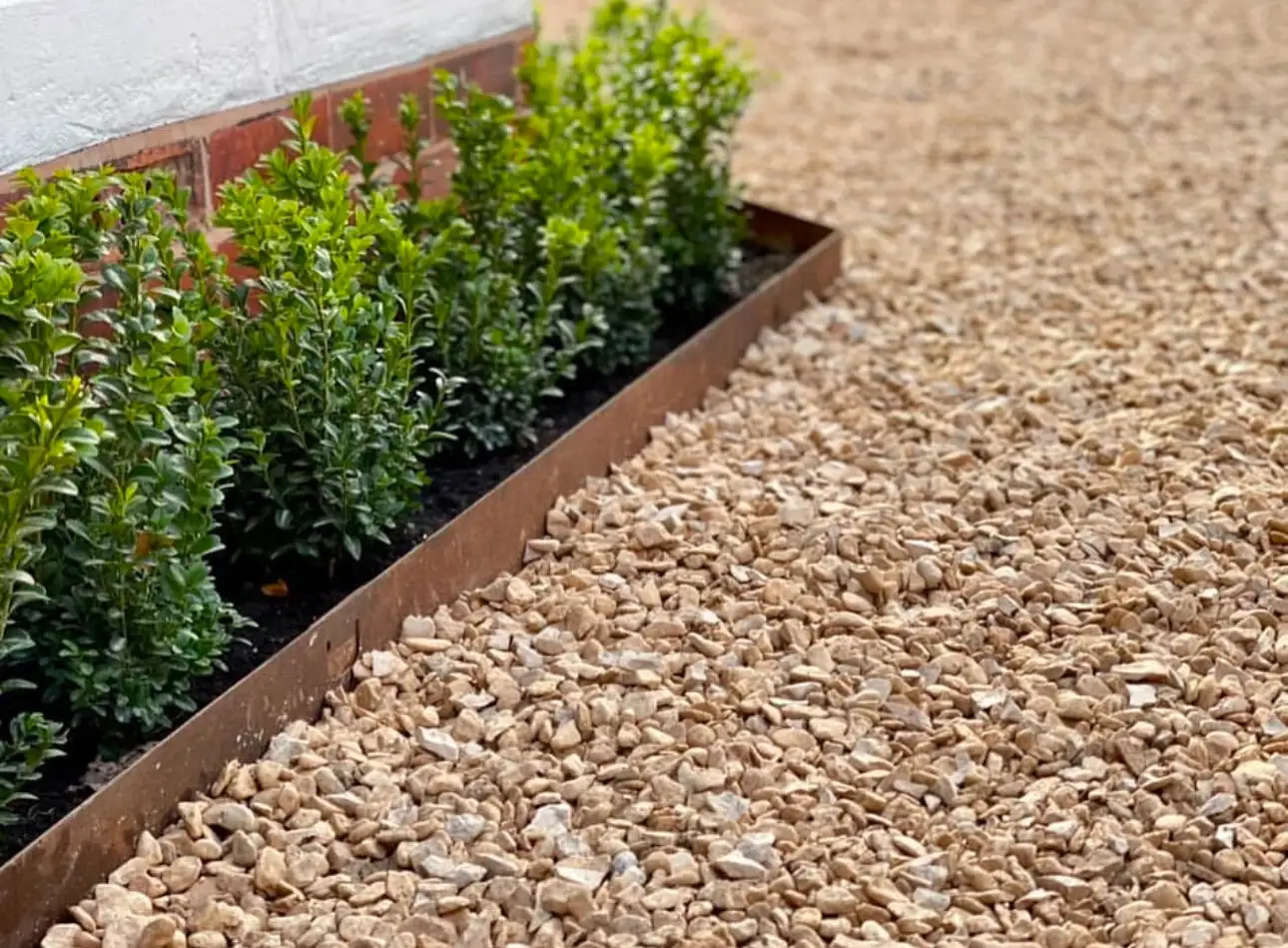
Add your chosen edging material, such as our domestic lawn and path edging along the path’s borders. This not only contains the gravel but also gives the path a finished, polished look.
Create a Base Layer
For better stability and drainage, add a 2 inch layer of coarse crushed stone or aggregate as a base. Compact the base thoroughly with a vibratory plate compactor or a roller.
Spread the Gravel
Add your top layer of gravel evenly across the surface. Aim for a depth of at least 5cm. For rounded gravels, dampen and compact them lightly for a firmer surface.
Shape the Path
Crown the centre slightly higher than the sides to aid water runoff during rainfall.
Step 5: The Finished Result
Once your path is complete, enjoy the benefits it brings to your home or project. A gravel path doesn’t just elevate the aesthetics of your outdoor space; it also provides functionality and lasting value.
Get in Touch
If you need help choosing the right products or support with your project, then our team here at The Ideal Garden will be happy to help! Product recommendations, advice, or detailed how-to tips – we’ve got you covered! Call us on 0800 44 88 123 or send us an email at info@theidealgarden.com
A gravel path can provide years of functionality if crafted correctly. Although it may seem like a daunting task at first, we hope this guide helps you complete your venture with a professional-quality finish. Maintain your path by topping up gravel every couple of years and keeping the surface free of weeds for best results.
trade counter & collections
Unit 14 Calves Lane Farm, Bellswood Lane
Iver, Bucks, SL0 0LU
navigation
useful links
secure payments

connect with us
© The Ideal Garden 2026 All rights reserved. Privacy PolicyCookie PolicyTerms & Conditions
Marketing by Unity Online